

About L'Aietta
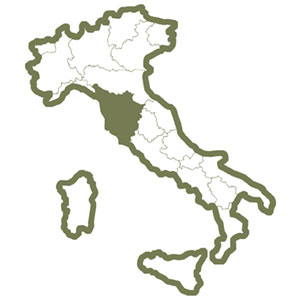
Montalcino, Toscana

Certified organic

3–4 hectares

1,100 cases/year
About the winemaker

Francesco Mulinari
Francesco Mulinari founded L’Aietta in 2001, while still in high school. His family owned a small piece of land where they often went for picnics, dotted with olive trees and a few grapevines. It wasn’t until Francesco discovered that the vines were officially registered as Brunello within the consortium that the idea for a winery began to take shape.
In 2004, he planted additional vines among the steep, rugged terraces of L’Aietta, a site of striking natural beauty where farming is done 100% by hand. The vineyard’s sandy soils are framed by century-old stone walls, and all vines here are trained as alberelli (head-trained), a rare but traditional method in Montalcino that allows for meticulous care of each plant.
Four years ago, Francesco expanded his project by purchasing a second vineyard on the southern edge of Montalcino, where the grapes for his Rosso di Montalcino are grown. Unlike L’Aietta, this vineyard follows traditional training methods, offering a contrast in both farming approach and microclimate.
Vineyards and winemaking
L’Aietta was never intended to be a vineyard. Francesco Mulinari’s father purchased the land as a place for family picnics and for the children to play. Sitting at nearly 2,000 feet in elevation, the site was once used as sheep-grazing land, its steep, rugged terrain untouched by modern agriculture. It wasn’t until Francesco came of age that he uncovered the hidden treasure within the property: Brunello vines quietly growing among the landscape.
The vineyards are certified organic, and farming is done entirely by hand, respecting the land’s natural balance. With such a small cellar—the smallest in Montalcino—the winemaking is straightforward and hands-off by necessity as well as philosophy. There’s no reliance on technology or manipulation, just a few tanks and barrels, letting the fruit determine the wine’s path. Francesco doesn’t make wine for financial gain; he makes it because he loves it. From the vineyard to the cellar, every decision, every step, is his alone, a reflection of both the place and the person behind the wines.


